
Upright vs. Grand Piano Tuning: What’s the Difference?
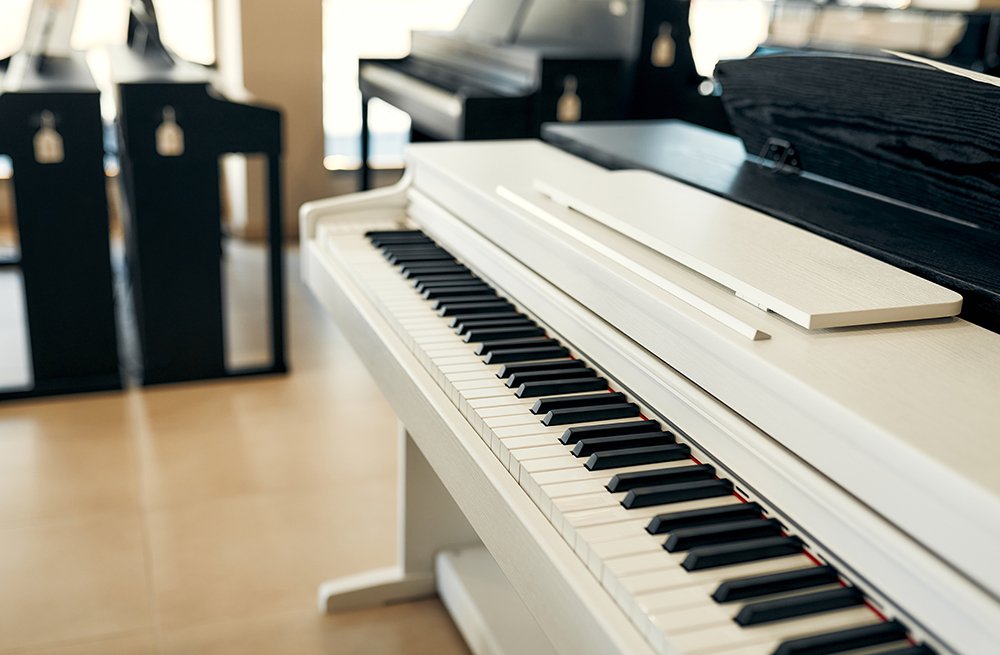
Pianos come in all different shapes, sizes, and designs, with the main two styles being vertical (or upright) pianos and grand pianos. While these two piano styles have many similarities, how different are they when it comes to the act of tuning?
From a piano tuner’s perspective, the general process for tuning these two styles is very similar. For many tuners, it is simply the difference between tuning with your left hand while standing (for most uprights) and tuning with your right hand while seated (for grand pianos).
While a variety of uprights and grands helps to mix it up on a long day of tuning, there is something relaxing about the experience of tuning a grand piano while seated (though I do like the workout of standing for the entire tuning with uprights).
From a technical point of view, both uprights and verticals have a similar number of tuning pins (220-250 range). You may say, “aren’t there only 88 keys on a piano?” And you would be exactly right! There are 88 keys on a piano, but after the lowest bass notes, the keys on a piano each have two or three strings per note (which helps keep tuners busy, wouldn’t want it to be too easy). I’ve dreamed of a self-tuning piano, but I’m guessing that is somewhere off in the future.
Until that far-off future day of self-tuning, AI pianos, you are more than welcome to reach out to Marcum Music Services to get on the schedule for a tuning!
I’m Bobby, the tuner for Marcum Music Services. Brought into the trade by my father using the Sanderson Accu-Tuner (SAT for short), I love helping people with their piano problems in the greater Louisville area (as well as southern Indiana). I look forward to meeting you!
-
Bobby Marcum
Piano Tuner
Marcum Music Services
(Not written with AI)